Who Can Be Held Responsible After a Road Hazard Accident?
July 28, 2026 · All 50 Law Team
Direct Answer Summary
Liability after a road hazard accident usually depends on who created the danger or failed to correct it. That can include a government agency responsible for road maintenance, a construction company, a private property owner, a driver whose cargo fell into the roadway, a utility company, or even a product manufacturer in some situations. Claims involving government entities often come with stricter rules and shorter deadlines.
Short Answer
The party that created the road hazard or had a duty to fix or warn about it may be liable for the accident.
Key Takeaways
- Road hazard liability often turns on who created the danger or failed to maintain safe conditions.
- Possible defendants can include government agencies, contractors, property owners, drivers, utility companies, and product manufacturers.
- A successful claim usually depends on proving duty, breach, causation, and damages.
- Maintenance records, witness statements, photos, video, and reconstruction evidence can strengthen the case.
- Claims against government entities often involve sovereign immunity issues, notice requirements, and shorter filing windows.
Why This Matters
Road hazard accidents can look simple at first and still turn into complicated liability disputes. A pothole, debris field, drainage problem, broken signal, or badly marked construction zone may point to a third party other than another driver. Identifying the right defendant early matters because deadlines, evidence, and legal rules can change depending on who is involved.
What Counts As A Road Hazard
A road hazard is any unsafe condition that makes travel dangerous for drivers.
Common examples include:
- Potholes
- Debris in the roadway
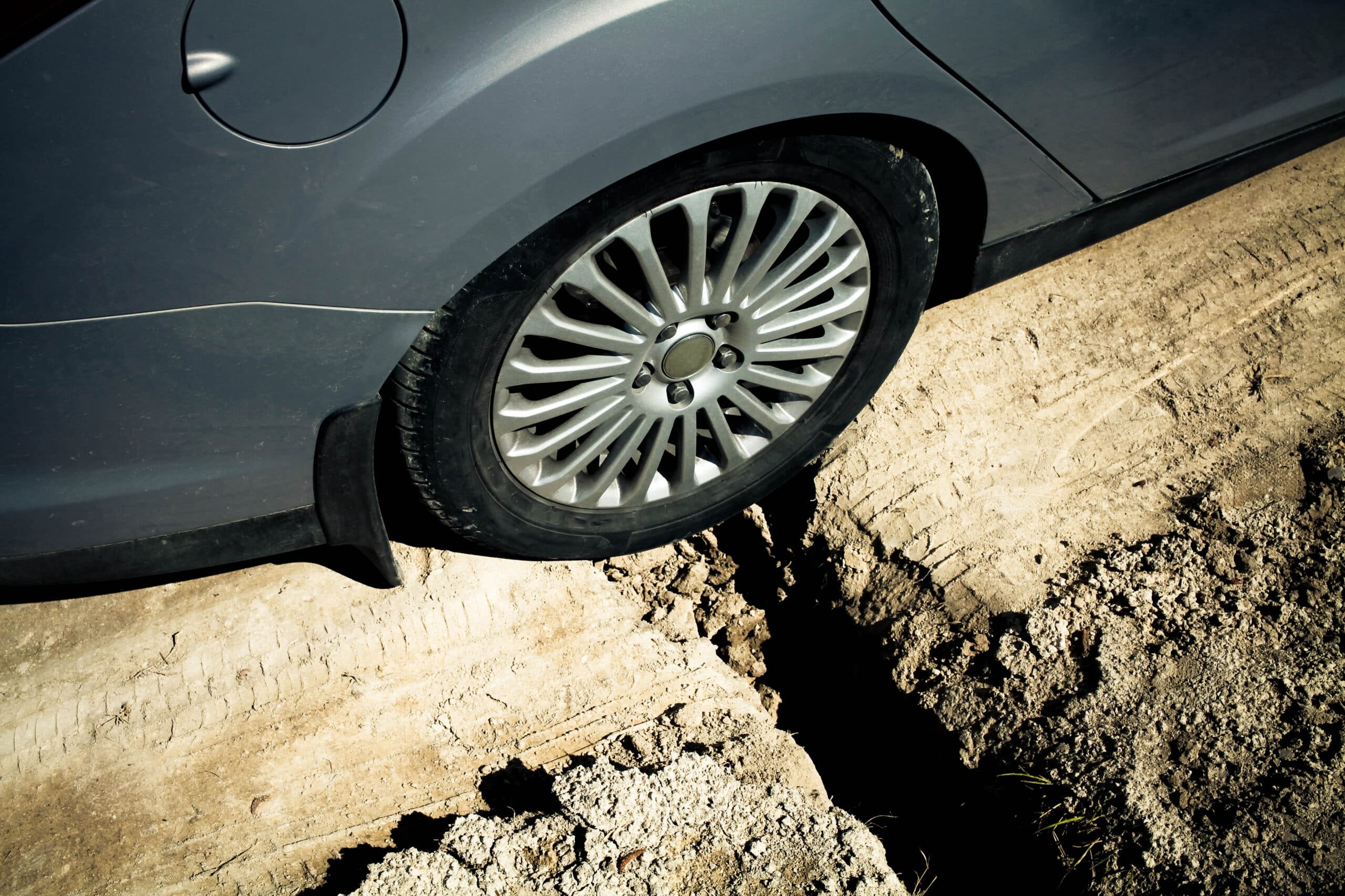
- Poor road maintenance
- Standing water or ice
- Construction zone problems
- Missing signs or broken traffic signals
How Can Different Road Hazards Cause Accidents
Different hazards cause accidents in different ways, but all of them can interfere with safe vehicle control or leave drivers without enough warning.
Potholes can cause a driver to lose control, and they can be especially dangerous for motorcyclists. Debris can force sudden swerving. Poor maintenance, faded markings, and eroded shoulders become even riskier at night or in bad weather. Standing water can lead to hydroplaning, while ice reduces steering and braking control. Construction zone hazards such as misplaced cones, unclear detours, and sudden lane shifts can confuse drivers. Broken signals or missing signs can also cause drivers to enter an intersection under false assumptions.
Who Can Be Liable For A Road Hazard Accident
Several different parties may be liable, depending on who created the hazard or had responsibility for preventing it.
Possible liable parties include:
- Government Agencies. For unsafe roads, potholes, drainage problems, eroded shoulders, or untreated hazards
- Construction Companies. For unsafe work zones, scattered equipment, debris, poor detours, or bad signage
- Private Property Owners. When hazards from their property spill onto public roads
- Vehicle Owners Or Drivers. If unsecured cargo or equipment falls into the roadway
- Utility Companies. For unmarked work, open manholes, or unsafe excavation areas
- Product Manufacturers. If a defective product, such as a faulty traffic signal, contributed to the crash
How Do You Prove Liability In A Road Hazard Case?
Most road hazard cases depend on proving negligence.
That usually means showing four basic elements:
- Duty Of Care. The defendant had a responsibility to keep the roadway safe or avoid creating a danger.
- Breach Of Duty. The defendant failed to meet that responsibility
- Causation. The hazard directly caused the crash
- Damages. The crash caused injuries, property damage, or other losses
What Evidence Makes A Road Hazard Claim Stronger
The strongest cases usually combine physical evidence, official records, and witness proof.
Helpful evidence can include:
- Photos and video of the hazard, vehicle damage, and injuries
- Police reports
- Maintenance records
- Witness statements
- Accident reconstruction analysis
What Compensation May Be Available After A Road Hazard Accident
Compensation may cover both financial losses and personal harm caused by the accident.
Possible damages include:
- Medical expenses
- Lost income
- Vehicle repair or replacement costs
- Pain and suffering
- Other out-of-pocket costs, such as transportation to treatment or help with daily tasks during recovery
Why Are Claims Against Government Entities Harder
Claims against government entities are often harder because sovereign immunity rules, notice requirements, and damages limits can apply.
A claim against a city, county, or state agency may require a formal notice before a lawsuit can even begin. Those notices often have strict formatting and timing rules, and mistakes can lead to rejection. Accessing maintenance records or internal reports can also take time, and some states limit how much compensation a person can recover from a government body.
Can Wildlife Or Animals Change The Liability Analysis?
Yes, but not every animal-related road hazard leads to a clear defendant.
Wildlife crashes are often treated as acts of nature, which makes liability harder to pin down. Even so, a government entity may share fault if a known wildlife area lacked reasonable warning, and a private owner may be responsible if farm animals or exotic animals escaped and created the hazard.
Can Liability Be Shared In A Multi-Car Road Hazard Accident?
Yes. More than one party can share blame in a chain-reaction accident.
One example is a driver who reacts recklessly to avoid debris and causes a secondary collision. In that situation, fault may be divided between the driver and the party that created the original hazard. Courts and insurers often sort that out by assigning percentages of responsibility.
Are There Special Deadlines For Government Road Hazard Claims?
Yes. Government claims often have much shorter deadlines than ordinary personal injury cases.
Notice periods may range from about 30 days to six months, depending on the state. Missing that early deadline can block compensation even when the underlying claim is strong.
Can Public Records Help Prove A Road Hazard Claim?
Yes. Public records can help show how long the hazard existed and whether the responsible party already knew about it.
Useful records may include maintenance logs, prior complaints, and crash reports from the same location. Those records can help show notice, delay, and failure to act.
What If The Hazard Came From Private Property?
A property owner may be liable if a dangerous condition from private land spilled onto a public road and caused the accident.
That can include gravel, debris, runoff, fencing, or materials from a construction site that entered the roadway and created an unsafe condition for passing drivers.
When Should You Get Legal Help After A Road Hazard Accident
Legal help matters early because evidence can disappear, deadlines can arrive fast, and the right defendant is not always obvious.
An attorney may help identify responsible parties, preserve surveillance footage and witness statements, obtain maintenance or weather records, and evaluate whether comparative negligence rules could affect recovery. Early investigation can matter even more when the case involves a contractor, public agency, or property owner rather than another driver alone.
Frequently Asked Questions
What If A Government Agency Knew About The Hazard But Did Nothing?
That can support a negligence claim if the agency had responsibility for the roadway and enough time to correct the condition or warn drivers. The challenge is often proving notice and meeting the special procedural rules that apply to government claims.
Can A Construction Company Be Liable For A Road Hazard Accident?
Yes. A construction company may be liable if debris, misplaced cones, poor detours, missing warnings, or other unsafe work-zone conditions contributed to the accident.
Do I Need More Than My Own Word To Prove A Road Hazard Case?
Usually, yes. Photos, video, police reports, maintenance records, witness statements, and reconstruction evidence can all make the claim much stronger than a driver’s account alone.
Next Steps
If a road hazard may have caused the accident, preserving evidence quickly can make a major difference. Photos, video, police documentation, witness names, and records showing who maintained the area may all matter. The sooner the facts are gathered, the easier it is to figure out who may be legally responsible and what deadlines control the claim.
How Can All 50 Law Help In These Situations
All 50 Law helps people understand the issues that often matter in a road hazard accident claim, including who may be liable, what evidence can support the case, and whether special government-claim rules may apply. When the cause of the crash is not obvious or several parties may share fault, All 50 Law works across jurisdictions and connects people with attorneys who handle personal injury matters under applicable state laws.
When accidents involve shared fault or comparative negligence, determining responsibility often requires reviewing evidence, insurance coverage, and local traffic rules. All 50 Law helps coordinate that process by providing access to legal professionals who can explain how liability may be evaluated and what steps may follow.
This article was written and reviewed by Marshall Silver, Esq., a New York-licensed personal injury attorney. This content is for general informational purposes only and does not constitute legal advice.